Dr. Felicia L. Rhaney, MD · Physician · Educator · Author
Clinical excellence. Lived expertise.
Without a blueprint, she became the physician she once needed.
Specialist care in menopause and midlife health, pelvic floor disorders, and urogynecology.
A breast cancer survivor. A woman who experienced medically induced menopause. A physician who understands these conversations as both doctor and patient.
Double Board-Certified•Fellowship-Trained Urogynecologist•Menopause Society Certified Practitioner (MSCP/NCMP)•Breast Cancer Survivor
Does This Sound Familiar?
You’ve already tried to explain it. This time, you won’t have to.
You don’t need anyone’s permission to know your own body has changed. You’ve spent enough time trying to convince people that what you’re feeling is real. This is the part where someone finally listens to the whole story, recognizes the pattern, and helps you understand what to do next.
Hot flashes, night sweats, or sleep that no longer restores you.
Brain fog, low mood, or anxiety that doesn’t feel like you.
Leaking, urgency, or recurrent bladder infections.
Pelvic pressure, heaviness, or a sense that something has shifted.
Pain or discomfort with intimacy.
Fatigue and a body that simply doesn’t feel like your own anymore.
The Difference That Defines Her
Many physicians treat menopause. Many treat pelvic floor disorders. Few can honestly say:
“I have lived through what many of my patients are living through.”
Dr. Rhaney is a breast cancer survivor who experienced medically induced early menopause — and was not a candidate for systemic estrogen therapy. She searched for answers as a patient long before she was a recognized expert. She has sat on both sides of the exam table. She knows what it is to be the woman in the room asking the questions.
As a PhysicianFellowship-trained, board-certified, evidence-based — two decades of clinical mastery.
+
As a WomanShe has walked through these transitions herself. When she says she knows, she actually does.
“
You don’t need a medical degree to know when something has changed.
— Felicia L. Rhaney, MD
Who I Help
Your instinct was right. Even when everyone kept telling you everything looked normal.
You have learned how to function inside exhaustion and brain fog.
You have become so good at coping that other people no longer realize how much you are carrying.
I have cared for women through these transitions. I have also lived through many of them myself.
As a breast cancer survivor who experienced medically induced early menopause — and who was not a candidate for systemic estrogen therapy — I understand these conversations from both sides of the examination table. I searched for answers as a patient. I know what it is to feel dismissed by the very system you work within.
That experience shapes how I listen, how I teach, and how I care. My patients are not cases. They are women navigating some of the most consequential chapters of their lives — and they deserve a physician who has done more than study those chapters in a textbook.
Symptoms don’t become less real because they’ve been minimized.
Physician · Educator · Author“Women deserve more than fragmented care.”
2
Board Certifications
20+
Years of Clinical Excellence
3×
Fellowship-Trained Specialist
1
Physician Who Sees the Whole You
Why Her Perspective Matters
Authority that was earned, not listed.
Her qualifications speak for themselves. What matters more is how they were earned—through elite training, lived experience, years of surgical practice, teaching, and a commitment to making complex medicine understandable.
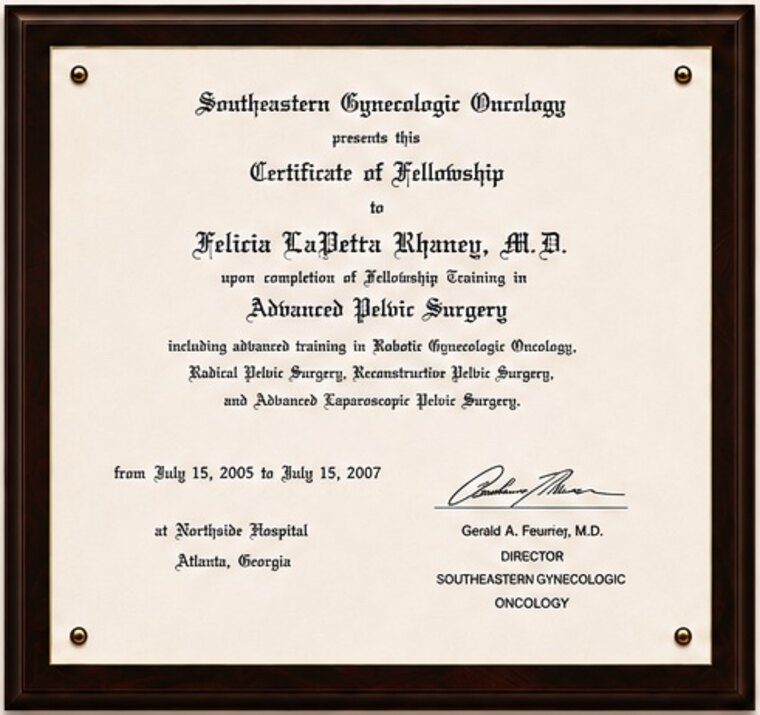
Fellowship-Trained in Advanced Pelvic SurgerySubspecialty training in urogynecology, reconstructive pelvic surgery, radical pelvic surgery, minimally invasive gynecologic surgery, advanced laparoscopy, and complex robotic pelvic surgery.
Menopause Society Certified PractitionerSpecialized certification in midlife and menopausal care.
Castle Connolly Top DoctorNational recognition in urogynecology and women’s pelvic health; peer-nominated and recognized among the top 7% of physicians in the United States.
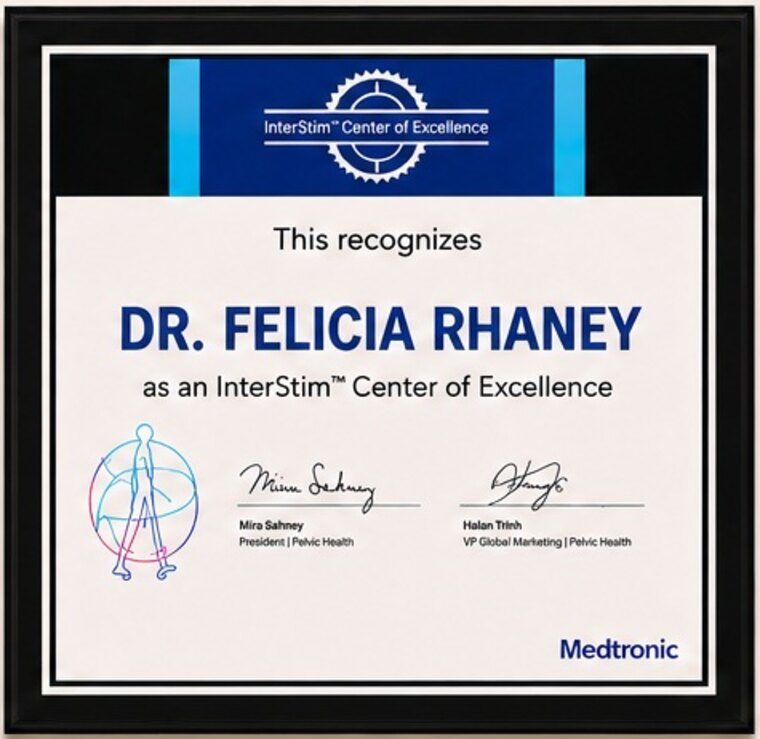
Medtronic InterStim Center of ExcellenceDesignation for advanced neuromodulation and pelvic floor care.
Alpha Omega Alpha Honor Medical SocietyMember since 2001; recognized among the top 6% of physicians nationally.
Castle Connolly Top DoctorPeer-nominated recognition for excellence in clinical care.
Fellowship TrainingAdvanced pelvic surgery and minimally invasive gynecologic surgery.Center of ExcellenceAdvanced pelvic floor and neuromodulation care.Alpha Omega AlphaHonor society recognizing sustained academic and clinical distinction.
Double board-certifiedOB/GYN & Female Pelvic Medicine and Reconstructive Surgery
Fellowship- trainedAdvanced pelvic surgery
MSCPMenopause Society Certified Practitioner
Alpha Omega AlphaMember since 2001
Castle Connolly Top DoctorPeer-nominated
Teacher. Author. Speaker.Advancing women’s health through education and public engagement
Becoming StrongHer Through Menopause
The Blueprint I Wish I’d Had
For women who are done chasing answers in a thousand different places.
You can take a breath now.
Not another collection of tips. Not another list of symptoms.
Just one place. One voice. One roadmap.
Written at the intersection of clinical truth and lived experience.
Step inside
Click to explore the blueprint →
Becoming StrongHer Through Menopause From Whisper to Blueprint
Before the Blueprint
What’s Inside
A quick orientation — what this book is about, and who it was written for.
Becoming StrongHer Through Menopause was written for women who want more than fragmented information. It was written for women who want a blueprint — a clear, compassionate, clinically grounded guide to what is happening in their bodies, what questions to ask, and how to prepare for the years ahead.
Who it’s for. Women approaching, moving through, or living beyond the menopause transition — and anyone who wants to understand it well enough to advocate for themselves or someone they love. No medical background required.
Major themes. The book moves through the experience as women actually live it:
Naming what is happening, without minimizing it
The body in transition — what changes, and why
Sleep, mood, and the symptoms women are too often told to ignore
Treatment options, trade-offs, and the questions worth asking
Building a long-game plan for the decades ahead
What you’ll gain. Language for what you’re experiencing, a framework for the decisions in front of you, and the confidence that comes from understanding your own body — replacing scattered articles and second-hand advice with one coherent, trustworthy guide.
Table of Contents
The complete roadmap — grouped by section. Tap a part to expand its chapters.
The Pink Elephant in the Corner of the Room
The Menopause Reframe
Clinical Truth Meets Lived Experience
Hormones, Timing, and the Menopausal Transition
Early Menopause and Primary Ovarian Insufficiency
Vasomotor Symptoms: Beyond Hot Flashes
Sleep in Midlife
Mood, Cognition, and Emotional Health in Midlife
Pelvic Health Across Midlife
Sexual Health, Intimacy, and Relationships
Bone Health and Osteoporosis
Cardiometabolic Health in Menopause
Cancer Surveillance in Midlife and Beyond
Nutrition as Physiologic Support in Menopause
Supplements in Midlife: What Helps, What Doesn’t, and What Harms
Hormone Therapy, Nonhormonal Options, and Informed Choice
Testosterone Therapy in Women
DHEA
Navigating Care, Advocacy, and the Medical System
Uncommon — But Very Real — Menopausal Symptoms
Safety, Autonomy, and Health Decision-Making
Menopause in the Workplace
Identity, Work, and the Midlife Reset
Terms of Engagement
Navigating Systems Without Self-Erosion
What Remains
The Shape of Presence
The Manifesto
What Is Now Permitted
An Invitation, Not an Endpoint
Read Before You Buy
Before you decide anything, let me introduce myself the way I would if you were sitting across from me.
Selected moments from the book, shared before you decide whether it feels like home.
Author’s Note
“Come sit with me for a minute.”
This book was not written to make menopause louder. It was written to make it clearer.
For generations, women have moved through menopause quietly, adapting, enduring, and continuing to function as if nothing fundamental had changed. The systems around them have relied on that quiet strength: healthcare, workplaces, and cultural expectations. Medicine has often taken it for granted.
I wrote this book because silence is not the same as strength, and endurance should never be mistaken for ease. A woman can be functioning and still be struggling. She can be performing and still be unwell.
If you’re the strong one, the dependable one, the one everyone says “she’s got it,” and inside you’re burning out, this book is for you.
Or move through the rest at your own pace — each piece is here to help you feel whether this book understands where you’ve been.
Introduction
Your story, told out loud.
For generations, menopause has lived in the margins of women’s lives. Not because it is rare. Not because it is insignificant. But because it has been quietly endured rather than openly named.
It has been whispered about in break rooms and bathrooms. Joked about to soften its weight. Minimized in exam rooms. Treated as an inevitable inconvenience rather than the profound biological, psychological, and social transition that it is.
And yet, nearly every woman will pass through it.
Menopause is not a footnote. It is not a failure. It is not a loss of relevance, femininity, productivity, or worth.
Silence has never protected women. It has only delayed recognition.
This book exists because whispers are not enough.
This is where the whisper becomes a blueprint. And this is where we begin.
The Pink Elephant in the Corner of the Room
The thing nobody says.
There is a presence that does not announce itself.
It does not interrupt conversation or demand attention. It does not introduce itself or ask to be acknowledged. It simply stands in the corner of the room, immovable, quietly altering how everything else is arranged.
You learn to live with it there.
You learn how to angle your body so you do not bump into it. How to sit where you can see the exits. How to keep one eye on the doorway, another on the clock, another on your own internal signals. You learn to scan without looking watchful. To listen to every new ache without voicing the question that is always nearby.
The elephant does not speak. It does not need to. Its presence sharpens perception. It changes how the body is inhabited, how decisions are made, how time is felt. It teaches you that survival does not end when treatment does. That watchfulness can be quiet. That stillness can be work.
This is what vigilance looks like.
Others may not see it. Some never ask. Some do not want to know what it would mean if they did.
So the elephant stays where it is. Not hidden. Not addressed. Not removed.
And life goes on around it— Carefully. Deliberately. Awake.
Chapter 1: “What Is Happening to Me?”
Why everything suddenly feels different.
You don’t meet menopause in a doctor’s office first. You meet it in your own life.
At 3 a.m., staring at the ceiling. At work, snapping at someone you usually have patience for. In the mirror, wondering when your own face started looking this tired.
You were taught to brace for menopause like a slow collapse. To start shrinking your expectations of yourself in advance.
Less energy. Less patience. Less beauty. Less power.
Continue reading in Becoming StrongHer Through Menopause.
Sleep
You are tired for a reason.
You know that bone-deep tired no nap can touch. The kind where your limbs feel heavy, your thoughts feel slow, and you are still expected to mother and partner and lead as if nothing has changed.
You wake up more exhausted than when you lay down. You forget words in the middle of a sentence, stare at your computer screen while the cursor blinks back at you, snap at the people you love and then lie awake later replaying every sharp edge.
And somewhere between the laundry and the late-night emails, a question slips in:
“What is wrong with me?”
Here is the truth: this is not laziness. This is not weakness. This is not a failure to “try harder.”
Mood
When your mind stops feeling like home.
You were taught to expect menopause as a body story. Hot flashes. Night sweats. Periods changing, then finally stopping. Nobody warned you about the moment your mind stops feeling like home.
Your mood flips on a dime and drags your whole spirit with it.
Anxiety steps to the front, crowding your chest, tightening your breath, putting a slight tremor in your hands, talking over your thoughts like a second voice you can’t shut off.
And you’re just standing in your own kitchen.
Irritability feels like heat under your skin, like you are one interruption away from saying something you can’t pull back.
You start to wonder: Is something wrong with my brain?
And underneath that: If I can’t trust my mind, what can I trust?
Join the First Readers
The book is still being finished, but the conversation has already begun.
Preorder details are being prepared while the book finds its final form. Join the interest list and you’ll be among the first to hear when it’s ready.
Members of the list will receive:
Publication updates
Preorder announcements
New excerpts as they become available
Advance reader opportunities
To be added, reach out through the contact section below — and browse the preview in the meantime. The door is already open.
Speaking & Media
Translating complex medicine into conversations women can use.
Women’s health conversations should not begin and end inside an exam room. Through television interviews, speaking engagements, and educational platforms, Dr. Felicia Rhaney translates complex medicine into language women can understand and use in everyday life. Because understanding should never depend on having access to a specialist.
Menopause & Midlife Women’s Health
Pelvic Floor Health & Urogynecology
Helping Women Understand Their Bodies
Advocacy, Trust & Medical Decision-Making
Breaking Cycles of Medical Silence
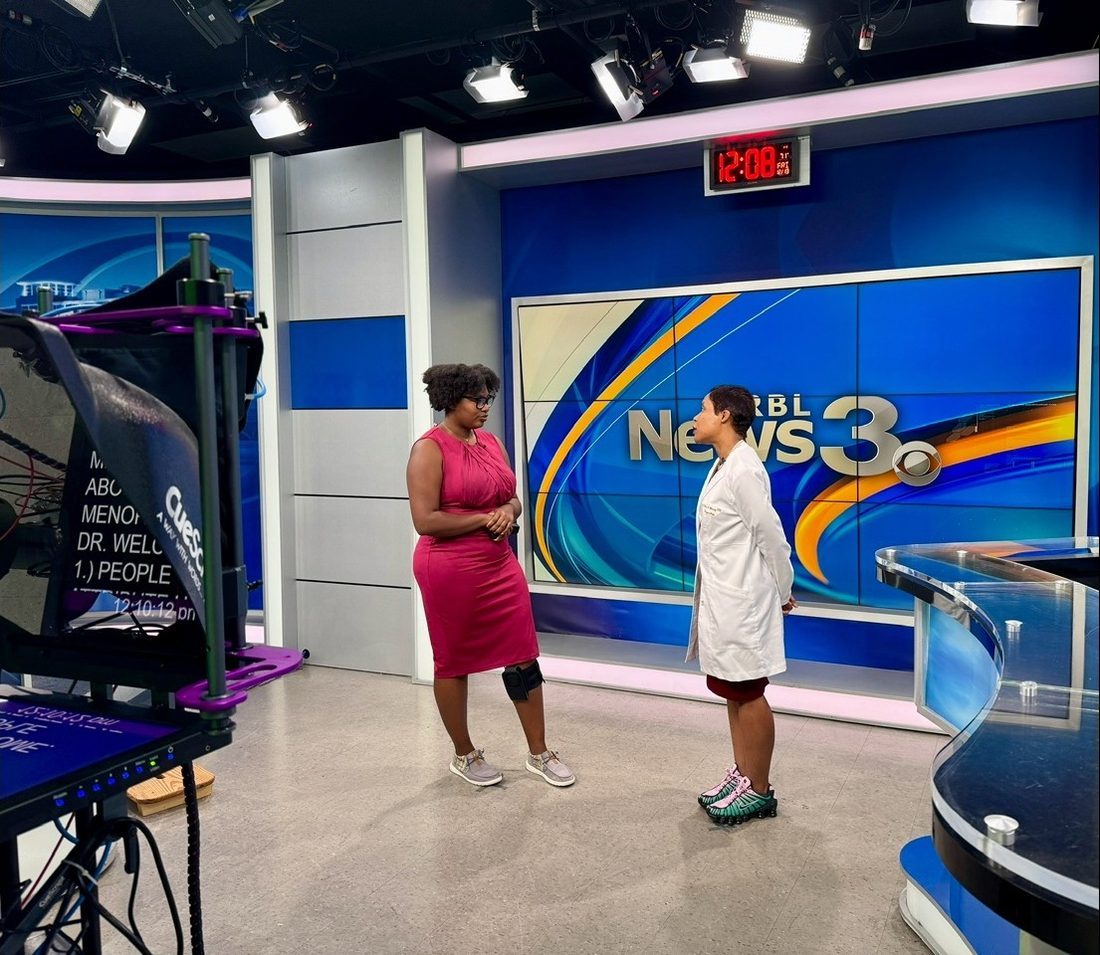
In conversation, not on a pedestal. Translating complex medicine into language women can actually use, on air at WRBL News 3. Practical enough to discuss over coffee. Precise enough for television.
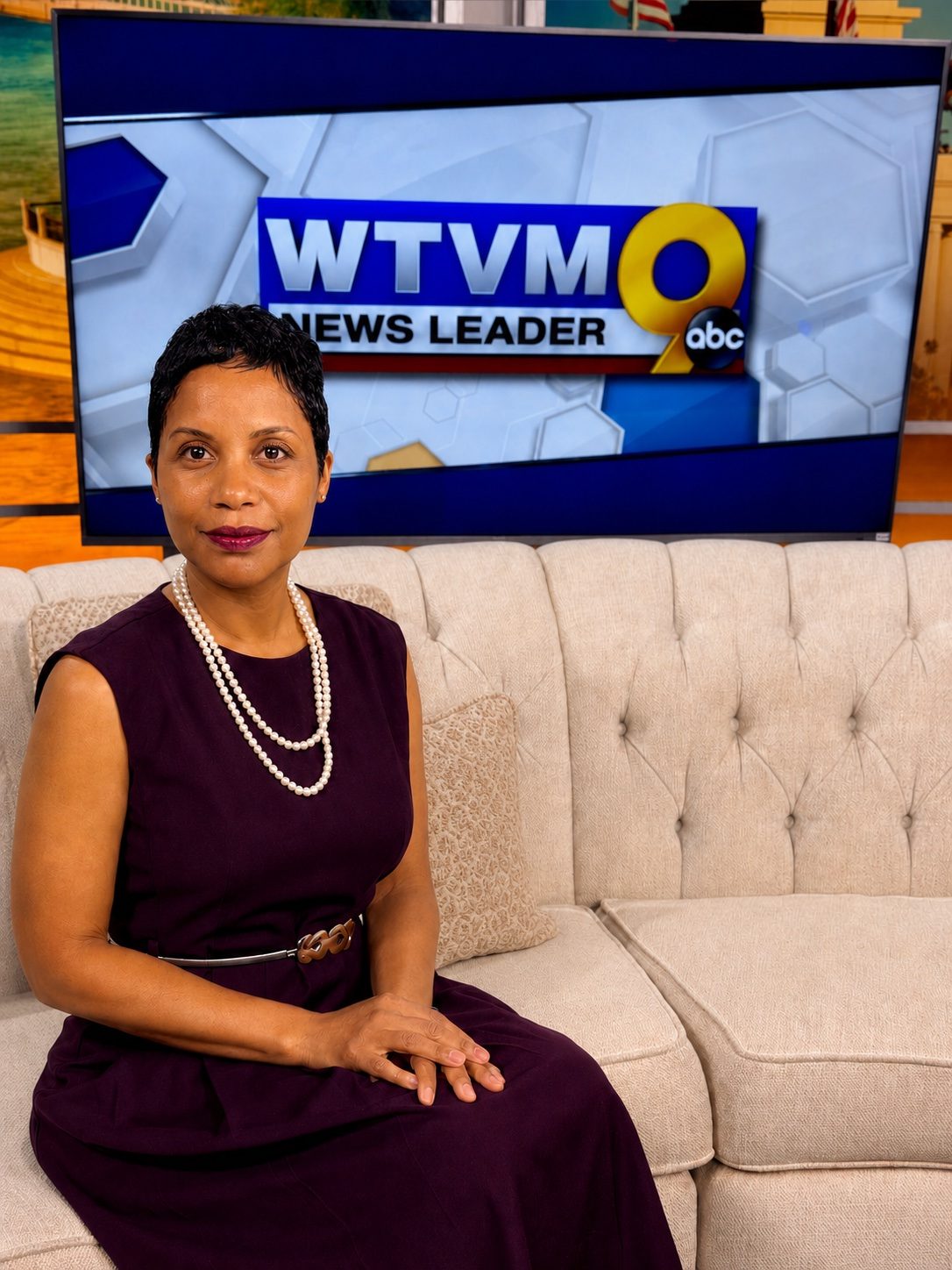
As seen onWRBL News 3·WTVM News Leader 9
WRBL News 3 — Practical conversations about menopause and women’s health.
WTVM News Leader 9 — Helping women understand what their bodies are trying to tell them.
Education is one form of care.
Whether speaking to patients, television audiences, community organizations, or professional groups, Dr. Rhaney believes understanding changes everything.
Speaking Engagements
Conversations that help audiences understand menopause, pelvic health, advocacy, and the changing needs of women’s health across midlife. Available for keynote presentations, panels, conferences, and educational programs.
Thoughtful conversations that bring women’s health, medical trust, and menopause into public spaces. Available for podcast interviews, television segments, print features, and expert commentary.